
Denizli · Güney · Eziler
Which Facility Will We Build in Eziler?
In April 2027 we plan to apply to the Rural Development Investment Programme on our family land in Eziler, Güney. We are weighing two grant options: compost and livestock. Legumes are processed in existing facilities in Denizli; building the same facility again would be an unnecessary, expensive investment.
- Status
- Options under review
- Application target
- April 2027
- Location
- Eziler, Güney
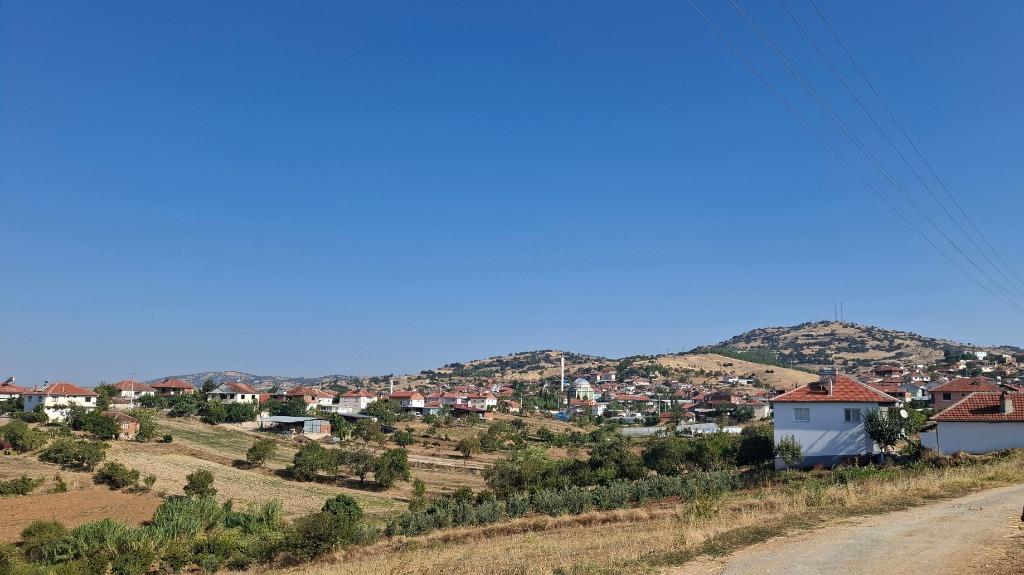
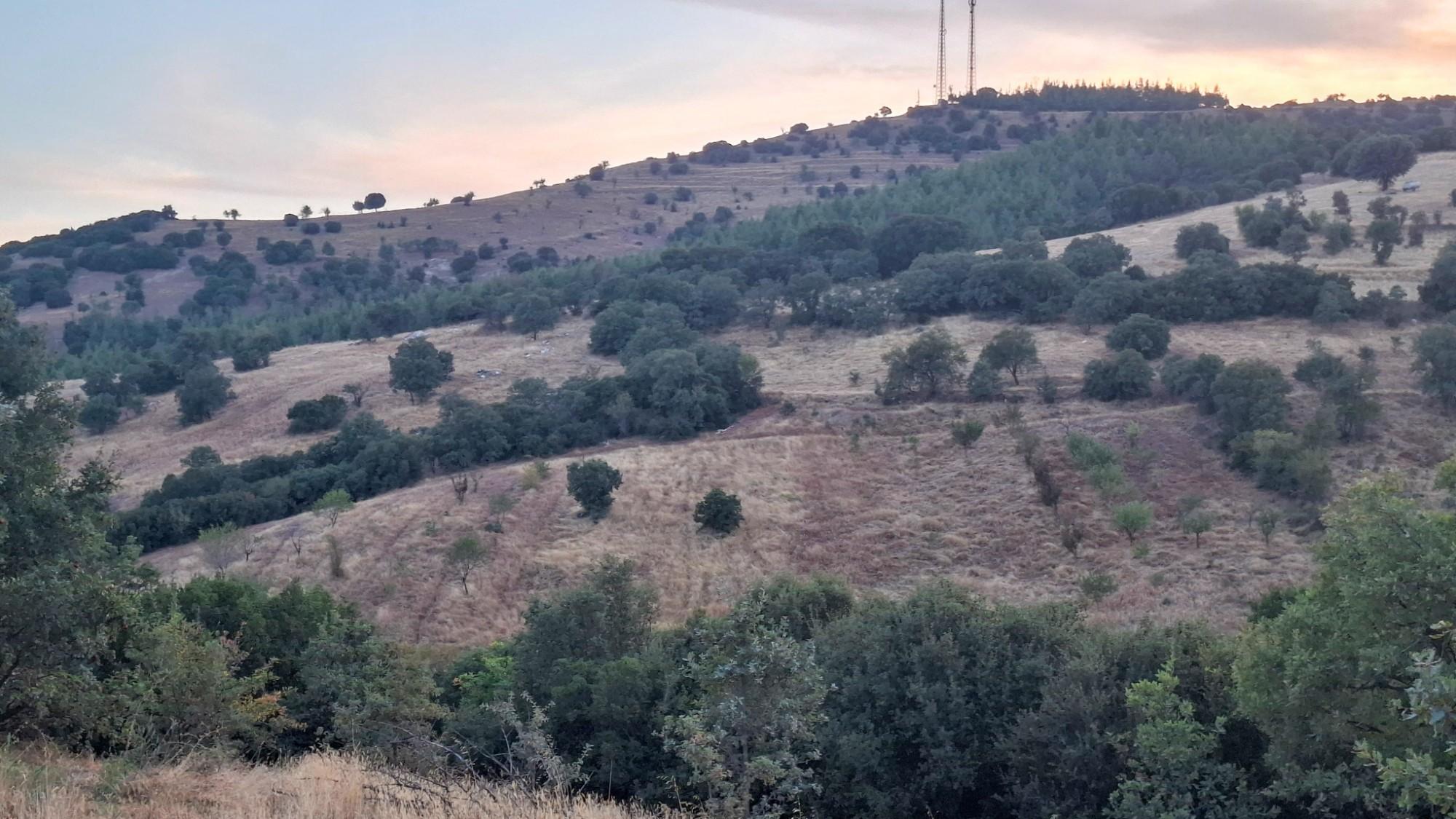
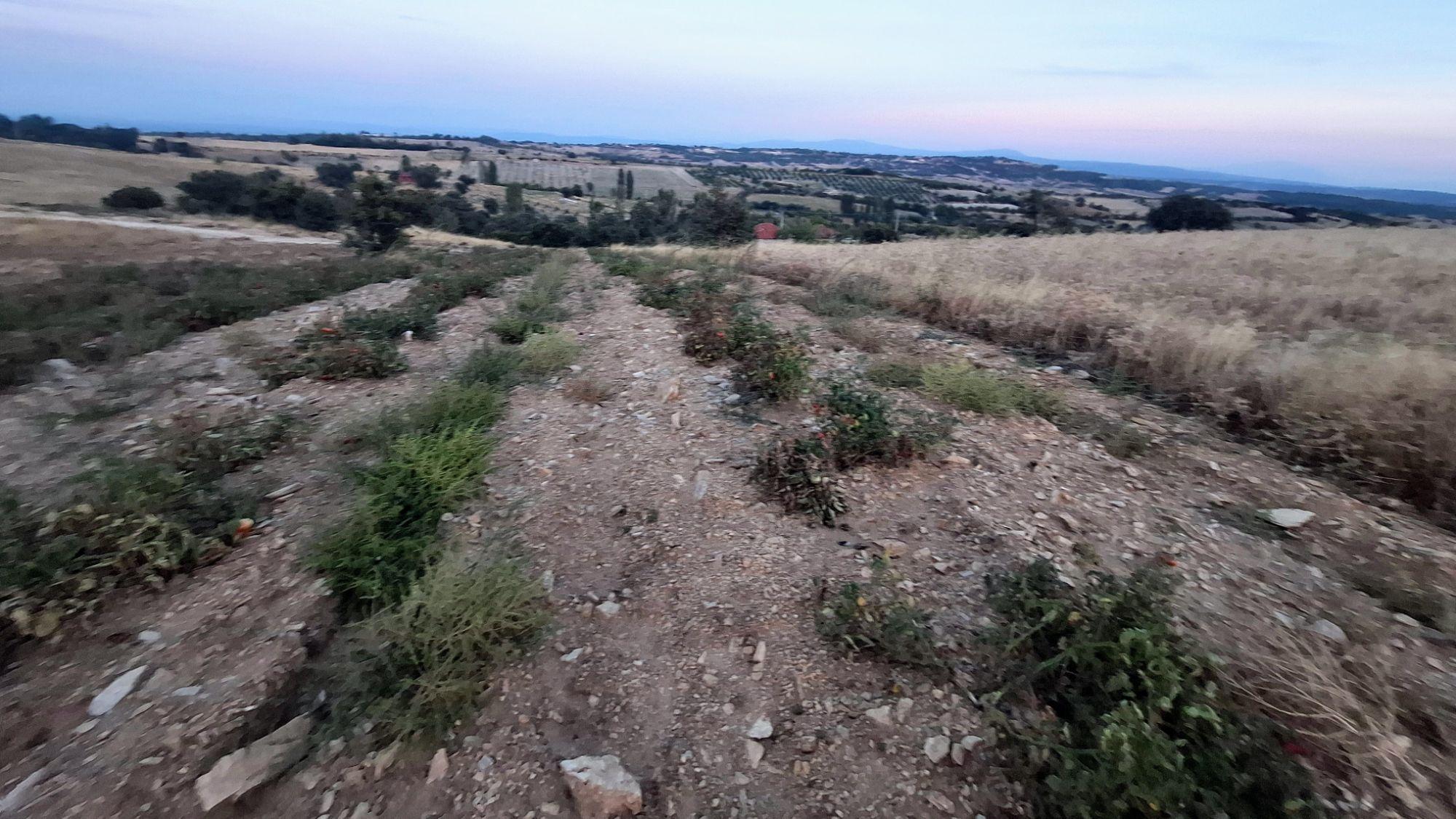
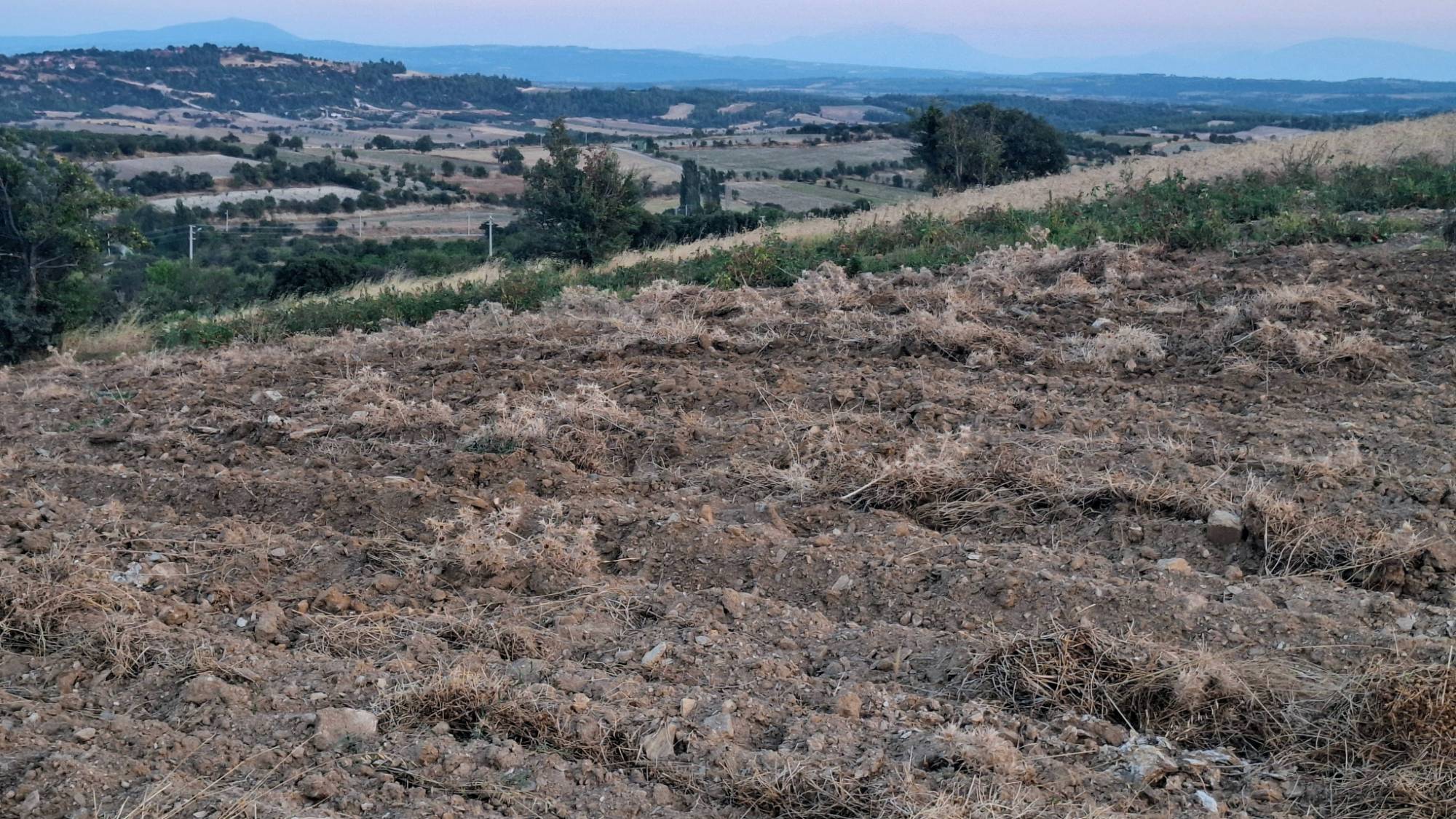
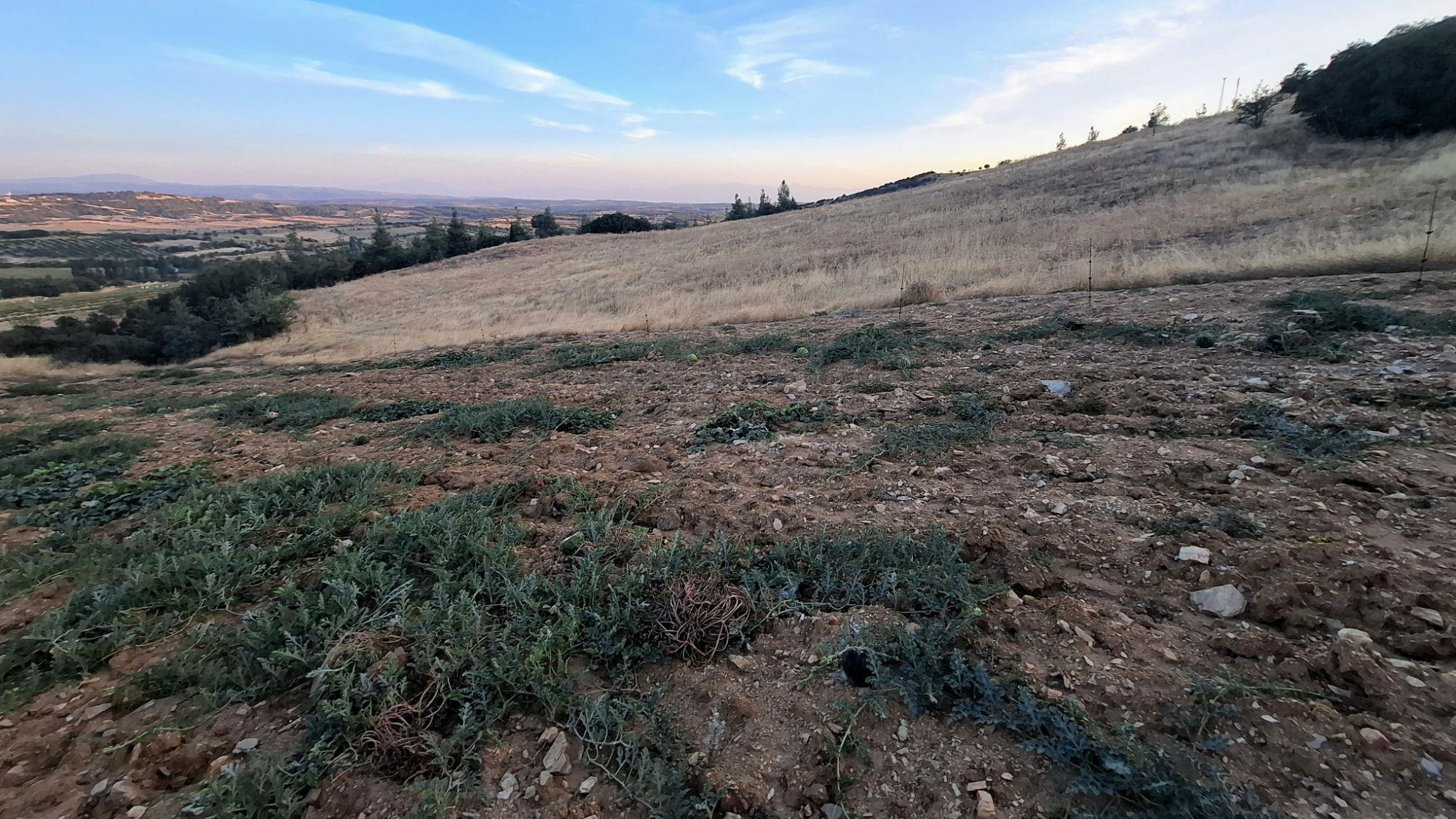
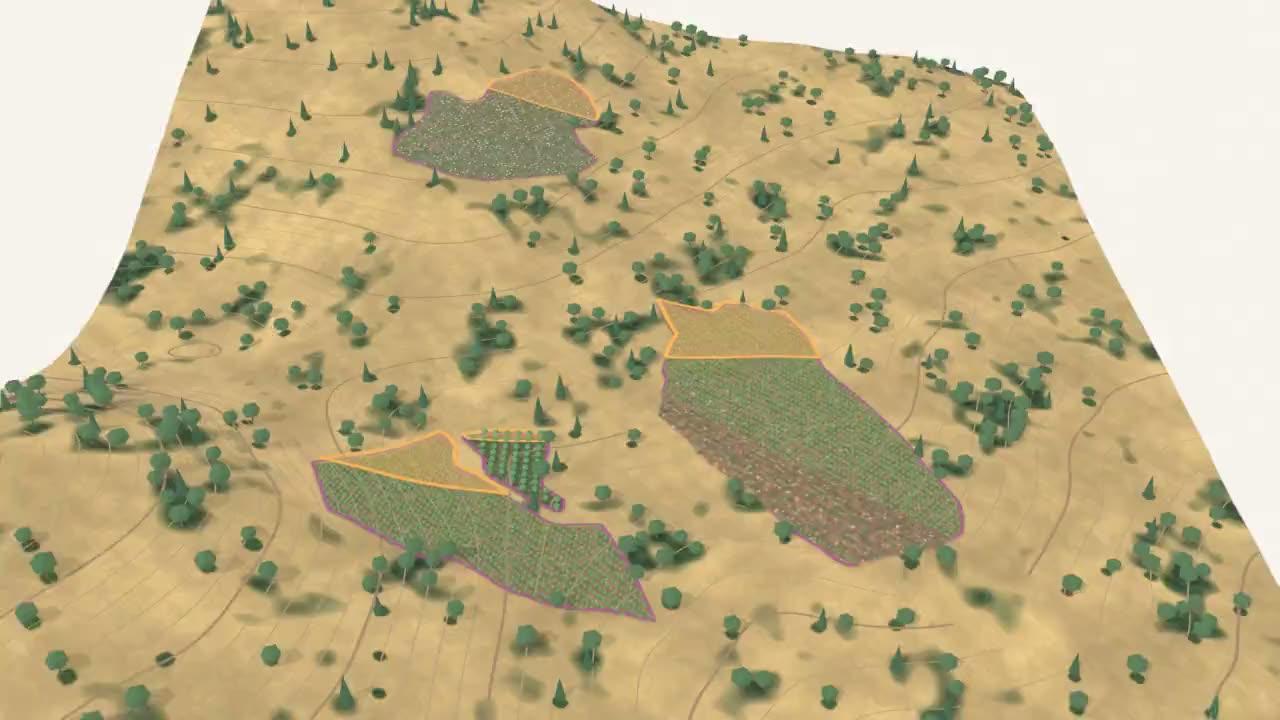
Our land: four parcels in the Alieren area
The investment site is our family land in the Alieren area of Eziler: four parcels in the same block (296) and on the same map sheet. The parcels are close together but not adjoining; which parcel hosts the facility will depend on the chosen investment and permits.
- The largest parcel, 296/44, and 296/40 to the north lie along a dirt road, making them the first candidates for the facility in terms of access and connections.
- 296/58 and the small orchard parcel 296/59 sit side by side to the south-west.
- The parcels are registered as field and orchard; a permit for non-agricultural use under Law No. 5403 will be obtained before building.
- The land is jointly owned family land; the application requires notarised consent and undertakings from the other co-owners.
| Block / parcel | Title deed area | Land type |
|---|---|---|
| 296/44 | 17,712.64 m² | Field |
| 296/40 | 11,207.44 m² | Field |
| 296/58 | 9,316.87 m² | Field |
| 296/59 | 1,529.39 m² | Orchard |
| Total | 39,766.34 m² (~39.8 decares) | |
Source: General Directorate of Land Registry and Cadastre parcel query application.
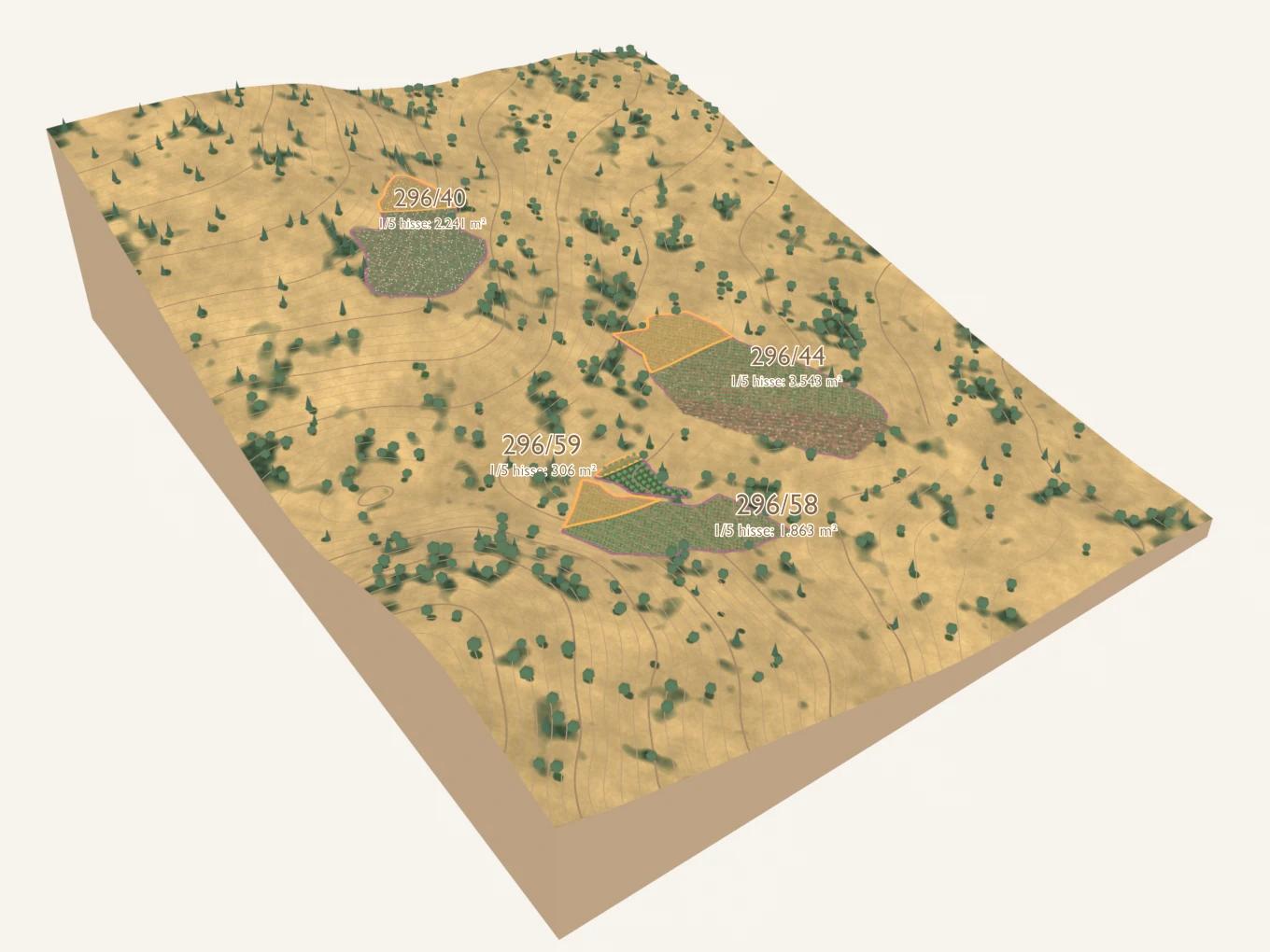
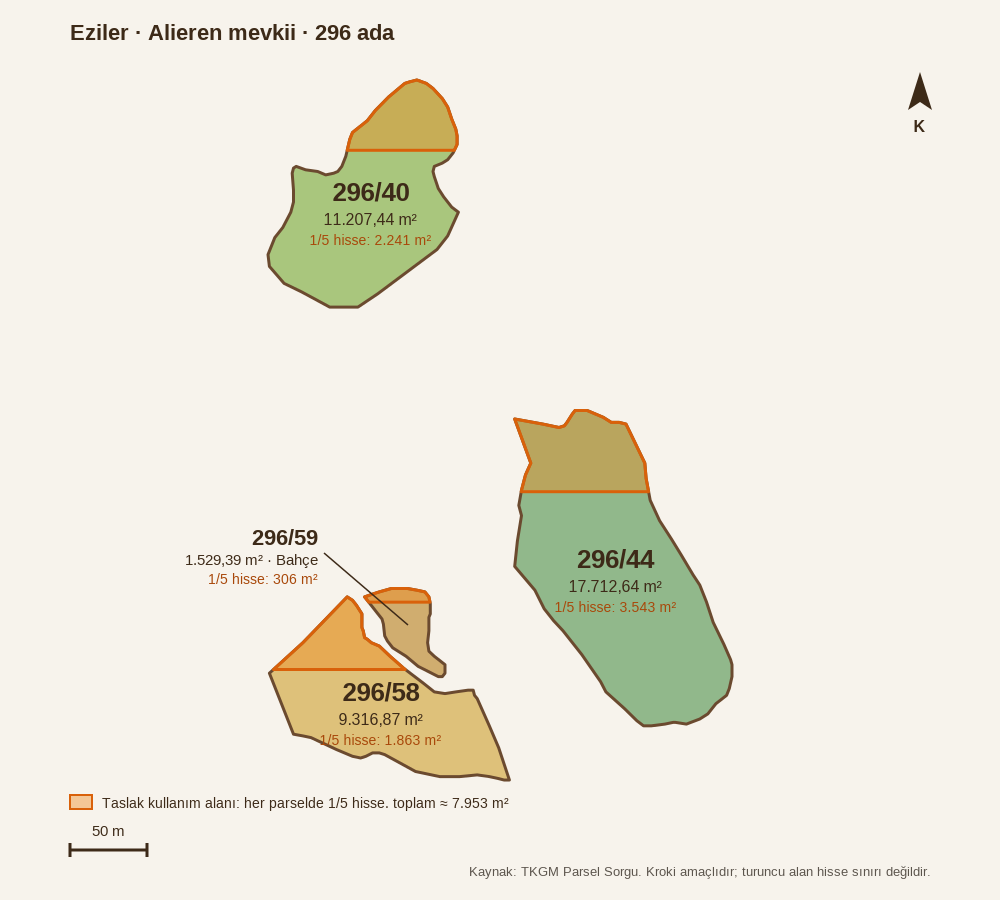
Elevation data comes from an open digital elevation model with roughly 10-30 m resolution; it shows the general slope and is not a survey. Parcel boundaries and areas come from the title deed records. Because the land is jointly owned, the orange areas are not share boundaries but planned draft usage areas equal to our 1/5 share in each parcel (about 7,953 m² in total); their locations may change. Plant rows, trees and the surface texture are stylised from site photographs and do not show the actual distribution of crops and trees.
Phased development: minimum facilities first
At Eziler we do not plan a large facility but a small one that grows with need. The concept animation shows, on the area equal to our 1/5 share, the ground being prepared first, then a small caretaker's house, a lightweight semi-open barn, a feed silo and a paddock being built, and the animals arriving last. Each phase will move forward as permits, funding and the co-owners' consent are settled.
This is a concept animation. Livestock is one of the two options we are weighing alongside compost, and no decision has been made; the location and size of the buildings may change. Animals and plants are scaled up for visibility.
Current Strategic Focus & Feasibility Status
Three-stage roadmap evaluation for our 39.8-decare parcel in Eziler
In our 2026-2027 planning, we are executing a phased strategy to minimize capital risk. Our priority is to scale existing regional harvest via contract grading/packaging before deploying capital into ground-up facility construction under grant programs.
1. Primary Candidate: Pulse & Tarhana Grading/Packaging
To maximize value for Eşme chickpeas and Eziler artisanal tarhana, contract sorting and certified packaging partnerships are implemented first. A grant application under the KKYDP call is targeted for parcel 296/44 (500 m² covered area + optical grading line).
2. Alternative Scenario: Compost & Organic Fertilizer Plant
A biological fermentation feasibility study has been completed to convert regional olive mill pomace/wastewater, vineyard prunings, and livestock manure into organic compost. This serves as our turnkey alternative pending environmental permits.
3. Parallel Track: Smart Irrigation & IoT Automation
Independent of facility construction, IoT-based soil moisture probes, weather stations, and solar automated valves continue active deployment across partner fields in Buldan, Güney, and Eziler.
Options
The programme allows one project per applicant, so only one of the grant options will be chosen.
1 · HOG-A
Compost from farmyard manure
An open-platform facility composting and bagging animal manure and bedding. Processing and packaging units must be built together.
Compost facility details →- Raw material: steady, sufficient manure supply nearby is essential
- Vermicompost and fertilisers with chemical additives are excluded
- Compost piles can be monitored with sensors
2 · TÜY-B / TÜY-C
Livestock facility
Barn, feed store and manure store for cattle (dairy or fattening) or sheep and goats. The species has not been chosen yet.
- New cattle facilities are not eligible in water-restricted basins; Güney's status will be checked
- For sheep and goats the applicant must own or commit to at least 40% of project capacity in animals
- Buying livestock is not grant-eligible; a leak-proof manure store is required
3 · Contract
Legumes: cleaning and packing at existing facilities
There are legume cleaning and packing facilities in Denizli. Instead of building our own, we have our products cleaned and packed under our brand at these registered facilities for a fee. We are not using the grant for this.
Legume facility setup guide →- No investment; the grant stays available for compost or livestock
- The packer's food business registration and label details are set in the contract
- We publish machinery, construction and roadmap guides for those who want to build this facility
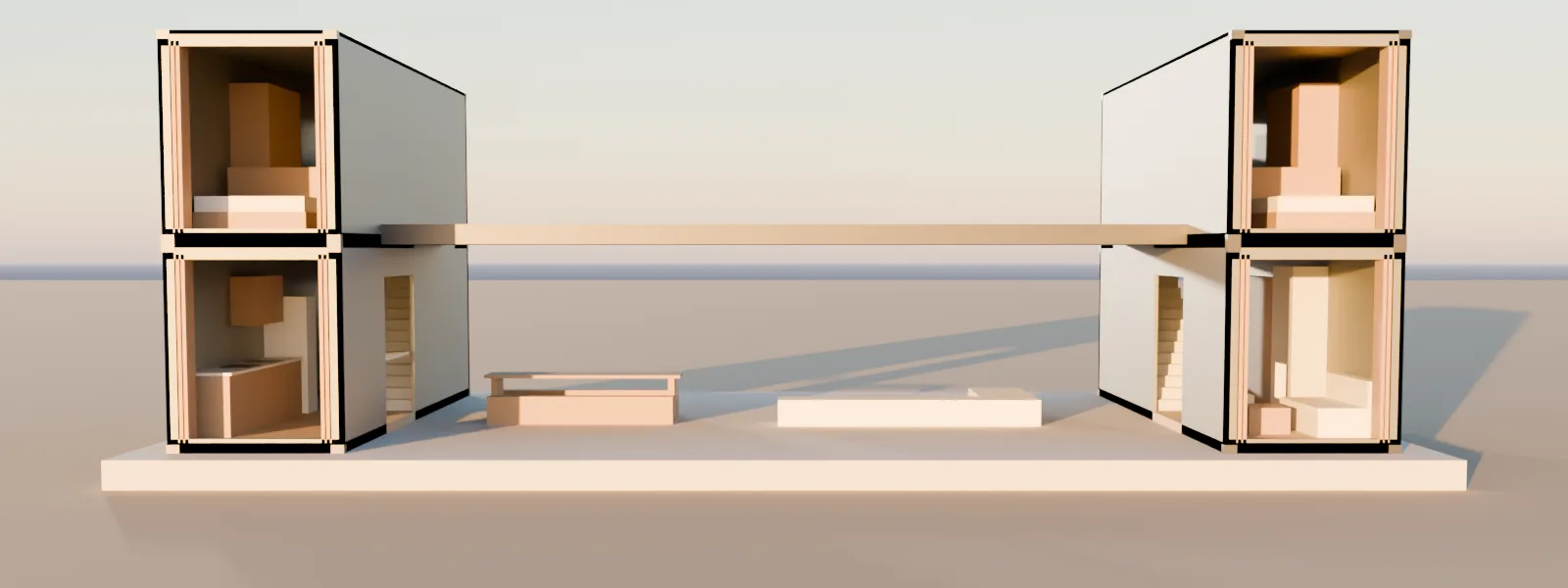
Container House Concept
A working model for the on-site living unit: two towers of stacked 40' HC containers with an open living area under a 12.2 m pergola between them.
Explore the concept →Facility Guides and Application Documents
Machinery, construction and roadmap guides for those planning a legume cleaning and packing, compost or livestock facility; plus the grant regulation page.
Facility Machinery Guide
Equipment types for legume cleaning and packing, compost and livestock facilities.
Facility Construction Guide
Building programme, utility connections and permit checks for the three facility types.
Legume Facility: Roadmap
Five years of phases from application and permits to setup and controlled growth.
KKYDP Grant Guide
Communiqué 2026/9, grant rates, investment topics and key rules.
Grant & Support Analysis
Comparison of KKYDP, ARDSI / IPARD programs and scoring simulation.
Compost Facility Feasibility
Turnkey organic compost facility technical study, layout and financial breakdown.
House Plans 3D
3D model of the container house, floor plans and room programme.
Land 3D Map
3D topography of the four parcels with real elevation data and 1/5 share areas.
Comparison criteria
We will score the two grant options on the same criteria and choose one:
- Land and permit suitability
- Initial investment and upfront payment
- Working capital
- Raw material or feed supply
- Sales channel
- Daily workload
- Income risk
- Fit with grant rules
The link between compost and livestock
Our own livestock could have supplied compost raw material, but we cannot build both. There is one application per person, and under the communiqué projects with shared economic ties or that complement each other on the same investment site are rejected even if prepared by different people; if they are later found to be combined, contracts are terminated and the grant is recovered. So we will choose only one of the two grant options.
The comparison is based on Communiqué 2026/9 and its implementation principles. The 2027 call's rules, rates and timetable are not yet published; the options will be rechecked when the guide is out.