
October 30, 2026
What Is an Eşme Kilim? A Guide to Uşak's Weaving Tradition
Explore Eşme's weaving tradition, geometric designs and the product details to check when choosing a kilim from Uşak.
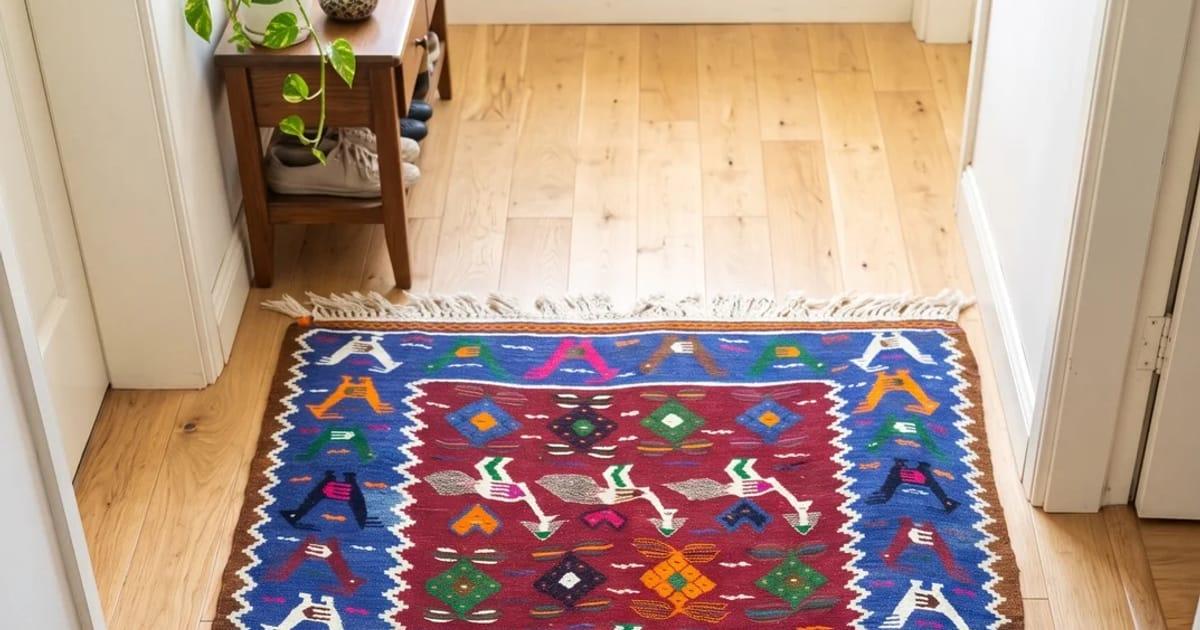
Eşme is one of the districts of Uşak known for kilim weaving. When looking at kilims from the region, you may notice vivid colours, lozenge-shaped medallions, hooked-looking motifs and clearly defined borders. These features do not appear in the same way on every piece; patterns, colours and layouts vary.
A kilim's design is best considered as a whole. Notice how the field is arranged, whether motifs repeat, how the border frames the piece and how the colours work together. Descriptive names such as “bird motif,” “medallion” or “central panel” usually refer to what is visible. On their own, they do not prove a kilim's age, exact place of manufacture or a definitive meaning for a motif.
When considering an Eşme kilim, ask the seller about its stated origin, dimensions, materials, weaving method and age if known. These details need to be verified for each individual piece. A photograph alone cannot reliably establish whether a kilim is wool or cotton, uses natural dyes or was made in a particular year. If a listing does not provide a detail, ask the seller rather than treating an assumption as fact.
For a one-of-a-kind kilim, close-up photographs can help you inspect the pattern and surface. The reverse, edges and fringe can also provide useful context, although no single visual clue proves that a piece is handwoven. Dimensions and condition are also important parts of an informed purchase.
Browse our selection of Eşme kilims, then check the current item details and purchase options in the corresponding listing in our Etsy shop.