
October 30, 2026
How to Identify a Handwoven Kilim: A Buyer's Checklist
Assess the reverse, edges, fringe and listing details together; no single visual clue proves that a kilim is handwoven.
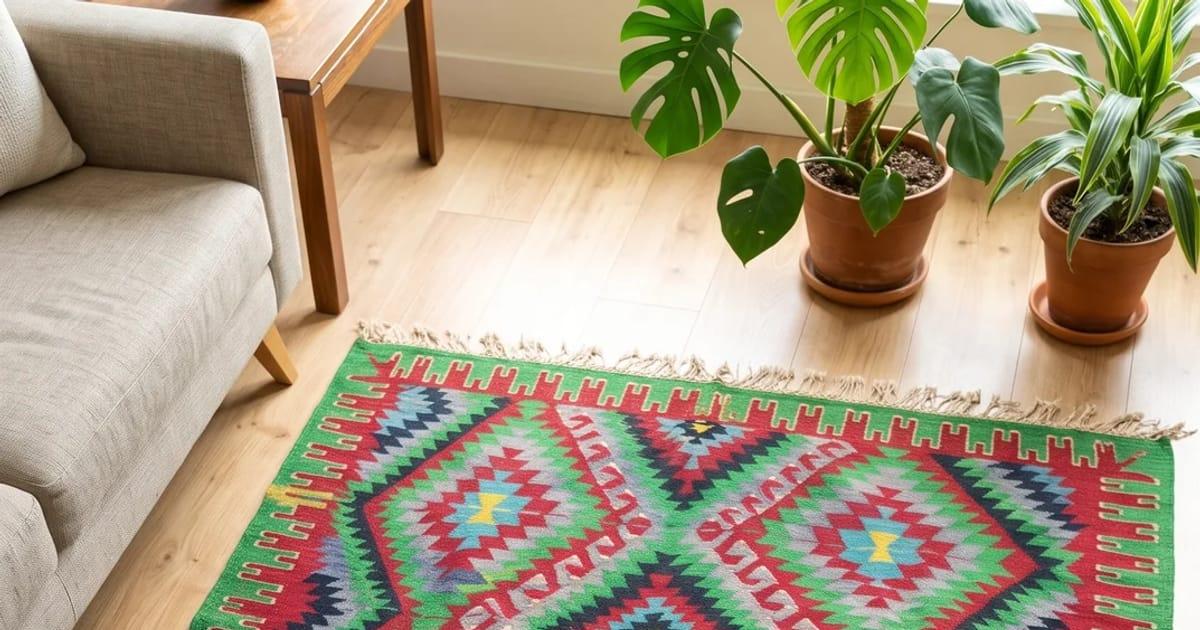
You cannot determine with certainty whether a kilim is handwoven just by looking at the pattern on its front. Machine-made pieces can reproduce traditional designs, while handwoven pieces can also have orderly, repeating patterns. Consider the appearance alongside the listing and the seller's information.
If available, inspect clear photographs of the reverse, edges and fringe. Small variations from weaving may be visible, but irregularity alone does not prove handwork. Seeing how the fringe meets the body of the kilim can help, although fringe may have been added or repaired later. Avoid drawing a conclusion from a single detail.
Ask the seller what the handwoven description is based on, where the piece was woven if known, and what materials it contains. Material, dye, age, condition and any repairs should be described separately. These details can differ from one piece to another; a product photo alone cannot establish an exact age or fibre content.
Look for width and length, front and reverse photographs, close-up details, a description of colours and motifs, known flaws and care advice. Remember that colours can look different depending on the screen and lighting. If there is a significant flaw or repair, ask for an additional photograph showing its location before purchasing.
This checklist is not a substitute for an expert assessment; it can help you identify unknowns and ask the seller useful questions. When browsing our Eşme kilim selection, assess the description and photographs of each individual piece.